

Is Ayurvedic treatment for chronic arthritis truly effective?
It helps in most cases, though how far it goes depends on the stage of the disease. Our Kerala protocol works on the root of Amavata by clearing Ama (metabolic toxins) and settling aggravated Vata. A 14 to 21 day course combines Panchakarma detox, internal herbal medicines and targeted therapies like Janu Basti. Most patients feel less pain and move more easily within that window, and deeper tissue healing continues for some months afterward.
Ayurvedic Rheumatoid Arthritis: A Balanced Healing Approach
Modern medicine classifies more than 100 forms of arthritis, while our protocol for ayurvedic rheumatoid arthritis in Kerala explores the cause with agni (metabolism) and dosha (bioenergetics) as the key concepts.
Specifically, our Kerala center specializes in healing the damages caused by these conditions:
- Amavata (Rheumatoid Arthritis): Autoimmune response caused by ama (metabolic toxins) attacking the synovial lining.
- Sandhivata (Osteoarthritis): A degenerative Vata disorder induced by loss of synovial mucus (fluid) and cartilage wear, commonly addressed through osteoarthritis Ayurvedic treatment in Kerala.
- Vatarakta (Gouty Arthritis): Toxins of Vata and Rakta (blood) accumulate in small joints, causing sharp, red-hot pain.
- Ankylosing Spondylitis: Chronic inflammatory spinal disorder where intensive rehabilitation and cervical therapy are key.
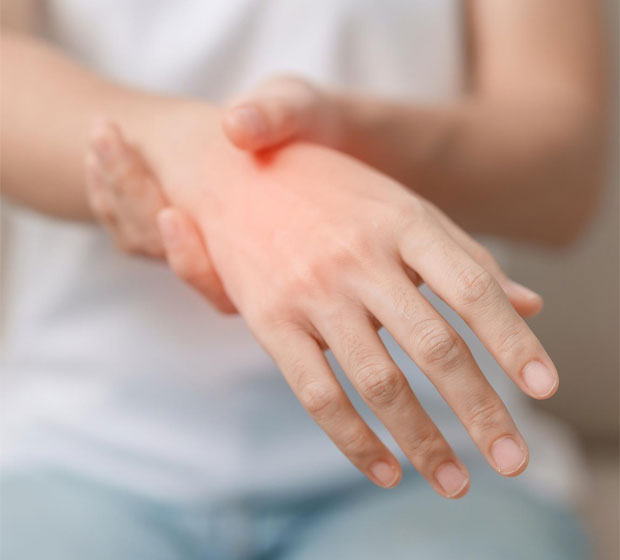
How does the 3-Step Clinical Protocol Work?
Applying a scientifically structured 3-step approach for Ayurvedic Rheumatoid Arthritis in Kerala ensures long-term remission.
Deepana & Pachana
Metabolic Correction
Herbs like Guggulu are used to “kindle” the digestive fire, preparing the body’s internal environment.
Panchakarma
Systemic Detox
Virechana removes blood intoxication, while Basti regulates the nervous system – a cornerstone of Panchakarma treatment for arthritis in Kerala.
Rasayana
Joint Regeneration
Directed therapies like Njavarakizhi provide a “gain in information” for your tissues to rebuild cartilage and muscle.
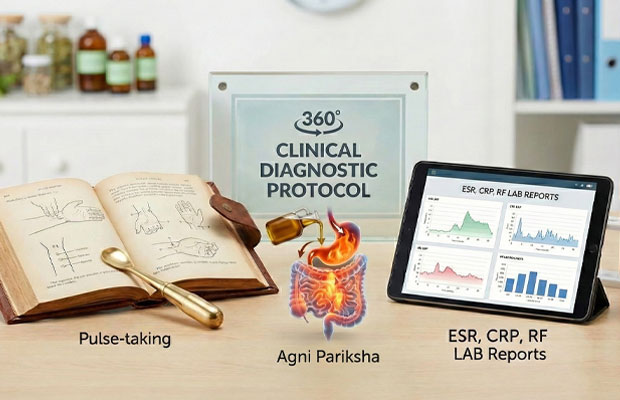
Our 360° Clinical Diagnostic Protocol
We proceed with simple advice. To ensure your safety and the accuracy of our 14-to-21-day programs, we integrate:
- Pulse Diagnosis: Assessing “distortion” (current imbalance) to determine accurate toxicity levels.
- Agni Pariksha: Evaluating your metabolic Agni, to see if your body can digest the medicinal oils we use.
- Modern Correlates: We review your ESR, C-reactive protein (CRP), and rheumatoid factor (RF) lab reports to track objective progress during your stay.
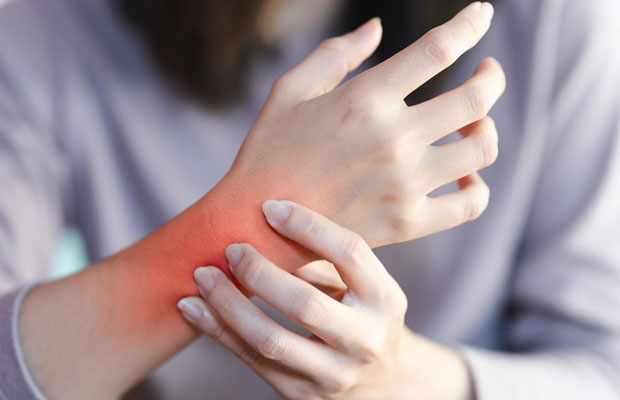
Our 14-Day Rheumatoid Arthritis Protocol in Kerala
To provide a precise diagnosis and tailor your 14-day healing journey, our BAMS physicians look for specific clinical signs (Lakshanas) detailed in the Madhava Nidana, the ancient Ayurvedic text on pathology.
Unlike a general symptom check, identifying these “red flags” allows us to determine the exact stage of your arthritis and choose the correct therapeutic intervention.
Five Ayurvedic Clinical Symptoms of Arthritis
In Kerala, diagnosing the Ayurvedic rheumatoid arthritis would involve the extensive procedure with our BAMS doctors to find the best Lakshanas (specific signs) in relation to those in the Madhava Nidana.
Targeted Panchakarma: The Science of Combined Detoxification
Our treatment is not a “spa massage.” This is a calculated series of medical procedures:
Ayurvedic Medicines and Herbs Used for Rheumatoid Arthritis
There is no single fixed medicine for Amavata. A BAMS physician chooses the formulation based on your dosha balance, the stage of the disease and your lab markers. The preparations we use most often are:
- Guggulu formulations (such as Yogaraja or Simhanada Guggulu): reduce Ama and joint inflammation.
- Shunthi (dry ginger): supports digestion and lowers aggravated Vata.
- Rasna and Eranda (castor): ease stiffness and joint pain.
- Ksheerabala 101: a medicated oil used in Janu Basti for the knees.
- Triphala: supports gentle detoxification and regular elimination.
These are prescribed and dosed by our physicians, not bought off the shelf. Ask our team which formulation suits your case.
Anti-Inflammatory “Karkidaka” Lifestyle
- Diet is 50% of the cure: Our farm-to-table arthritis diet strictly avoids “apathya” (harmful) foods, complemented by practices like yoga for joint health and arthritis recovery.
- Avoidance:Curd, fermented foods, cold beverages, and nightshades (tomatoes, potatoes). Include warm barley water, red rice (najwara), drumstick leaves, and ginger-turmeric infusion.

Treatment Duration and Cost
Most patients stay 14 to 21 days. The 14-day protocol covers oleation, detox and early rejuvenation. The 21-day protocol adds a longer rejuvenation phase for chronic cases.
- 14-Day Protocol: Covers internal oleation (Snehana), detoxification (Virechana or Basti) and early rejuvenation.
- 21-Day Protocol: Adds a longer rejuvenation phase — recommended for chronic or advanced cases.
The final cost depends on room category, the therapies used and the medicines prescribed after assessment. For a quote for your own case, contact us or see our Panchakarma price list.
Take the First Step Toward Pain-Free Living
Don’t let joint stiffness dictate your lifestyle. Whether you want preventive detox or clinical intervention in chronic pain, our experts in Ayurvedic Rheumatoid Arthritis in Kerala are here to guide you through a personalized healing journey, including Ayurvedic treatment at our Trivandrum centre for focused, long-term recovery.
Frequently Asked Questions
Can Ayurveda actually "cure" chronic arthritis or just assist in pain relief?
Ayurveda judges prognosis by the stage of the disease: Sukha Sadhya (easily managed), Yaapya (manageable over the long term) and Asadhya (advanced). Early and mid-stage Amavata usually responds well, with lower inflammation and better joint function. Long-standing, advanced cases are managed rather than reversed. We track your ESR, CRP and RF during the stay, so progress is measured rather than assumed.
What is the duration of the treatment for arthritis in Kerala?
The residential stay for a comprehensive clinical protocol is usually between 14 and 21 days. This is to enable the completion of the Panchakarma cycle: 7 days for internal oleation (Snehana), 3-5 days for intensive detoxification (Virechana or Basti), and the final week for specialized rejuvenation (Rasayana), intended to rebuild cartilage and bone tissue.
How long does it take to see visible treatment results?
For structural changes and long-term remission, a clinical stay of 14 to 21 days is standard. While immediate relief from stiffness often occurs within the first 5-7 days of remission (initial stage) of Ayurvedic Arthritis Treatment in Kerala. Actual healing of the deeper tissues (dhatu) and stabilization of the immune system usually require 3 to 6 months of continued treatment with oral medications and lifestyle adjustments.
Which Ayurvedic treatment is most effective for knee pain and osteoarthritis?
Janu Basti is the gold-standard treatment for Ayurvedic arthritis treatment in Kerala. This technique involves creating a reservoir, using warm medicated oil (e.g., Ksheerabala 101), over the knee joint to encourage the development of synovial fluid and lubrication of cartilage. This is most often combined with Njavarakizhi (sources of medicinal rice poultice) to nourish the surrounding ligaments and muscles.
Is it safe to stop my allopathic prescription during the retreat?
No, at our retreats, we work with your allopathic history. As your body begins to respond to Panchakarma and internal inflammation drops (verified by clinical trials), our senior BAMS physicians will coordinate a gradual reduction of modern medications to prevent “rebound flares.”
Why is Kerala's monsoon season recommended for joint treatment?
The cool, humid monsoon helps open the body’s channels (srotas), so it absorbs medicated oils and herbal decoctions more readily. That is why many patients choose the monsoon months for Panchakarma.
Medically reviewed by Dr. Arun Radhesh R. (BAMS, MBA), Chief Physician, Ayur Wakeup
Visiting Consultant, Govt. Ayurveda Hospital · Last reviewed: 29 May 2026