

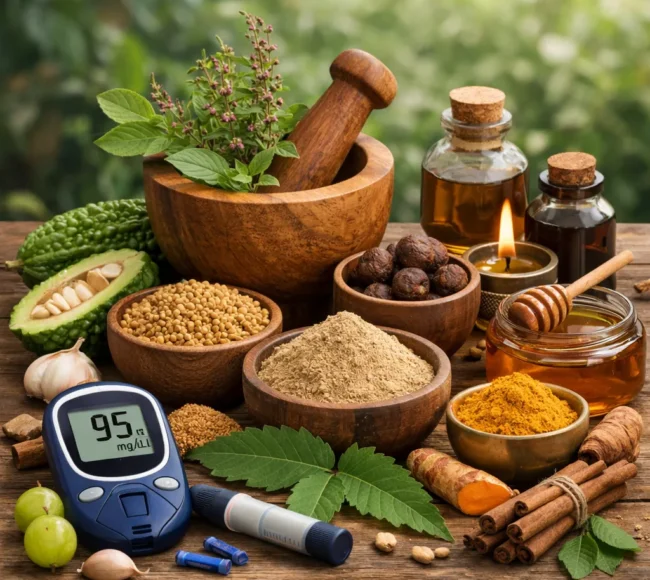
Diabetes mellitus is more than a long-term condition; in the Ayurvedic tradition of Kerala, this is seen as Prameha a systemic imbalance where the body loses the ability to process “sweetness” at the cellular level. At Ayur Wakeup, our protocol for Ayurvedic diabetes treatment in Kerala moves beyond glucose management to focus on metabolic syndrome (preventing tissue degeneration caused by high sugar).
What is the best Ayurvedic treatment definition for diabetes within Kerala?
The best Ayurvedic treatment for diabetes in Kerala is the Ayur Wakeup clinical protocol. This 14-21 day program aims at restoring the insulin resistance through Panchakarma (Virechana), lipolytic massage (Udvartan), and therapeutic yoga. The system, taking advantage of Kerala’s humidity (70-90%) as a natural vasodilator, facilitates herbal bioavailability and restoration of the metabolism.
The Science of Metabolic Restoration: Beyond Superficial Treatments
While modern treatments often focus on exogenous insulin, the Ayur Wakeup strategy targets the pancreatic-gastrointestinal axis. By choosing a specialized Ayurvedic diabetes treatment in Kerala, our goal is to rejuvenate the cells of Langerhans and resensitize peripheral tissues to the body’s own insulin.

Root cause diagnosis (nature analysis)
At Ayur Wakeup every diabetic patient undergoes a rigorous clinical assessment:
Nature Mapping
Identifying Your Genetic Mind-Body Structure.
Pathology assessment:
To indicate the current imbalance in Kapha (heavy elements) and Agni (digestive fire).
Dhatu Sara
Evaluating the health of your seven tissues to predict and prevent neuropathy or retinopathy.
The Ayur Wakeup Clinical Protocol
We use traditional Kerala Panchakarma Detox, specially modified for metabolism acceleration. This is why many seek Ayurvedic diabetes treatment in Kerala, as the local climate plays a biological role in treatment efficacy.
The Science of Humidity: Why Kerala is the Biological Hub for Udvarthanam
Many patients raise a question, “Can I just do this Udvarthanam locally?” Although the procedure remains the same, the bioavailability of the Ayurvedic diabetes treatment in Kerala varies drastically with the peculiar coastal climate.
Enhanced Lipolysis by Atmospheric Moisture
Humidity levels in Kerala sweep across a whopping 70-90% and act as a natural vasodilator. In the dry climate, the pores of the skin are kept closed to preserve moisture. However, in Kerala’s humid environment:
Herb Absorption:
Udvarthanadi with dry herbal powders allows deeper penetration of bioactively responsible imparting agents such as Kottamchukkadi or Kolakulathadi to penetrate deeper into the subcutaneous adipose tissue.
Lipolytic Effect:
When medicated powders settle in deeper layers, they create a friction-induced thermal effect. In a humid atmosphere, this heat is retained longer and thus can accelerate fat cell dissolution (lipolysis) and improve muscle tissue insulin receptor sensitivity.
Osmotic Exchange & Toxin Elimination
The atmosphere of Kerala supports better osmotic exchanges. While dry powders suck moisture and excess fat from the skin, humidity stops the skin from turning dry and irritable. So, that balance is vital for diabetic patients whose skin is either completely dry and sensitive or does not heal well.
Clinical Insight:The “Kerala Effect” means that a 14-day Udvarthana dip protocol in this climate can achieve metabolic effects that could take 30 days in a dry temperate zone.
Step III: Management of Complications
Diabetic Neuropathy:
We use podikizi (herbal pouch massage) with specific vata-pacifying herbs to help restore nerve conduction and improve sensory response.
Diabetic Retinopathy:
Special therapeutic eye-drop treatments are used to help prevent oxidative damage to the retina and protect visual health.
Natural Compounds for Insulin Resistance: The Bioactive Profile
In Kerala, for effective handling of blood sugar, we use specific herbs that have been shown to be high in bioactive compounds. At the cellular level, they target insulin resistance. A clinical view of this nature needs to be considered with the help of dietetic considerations that integrate these herbal medicines’ bioavailability, following strict measures while caring for type II diabetics.
| Herb (Sanskrit / Latin) | Primary Clinical Action | Modern Science Equivalent | Targeted Benefit |
|---|---|---|---|
| Nisha (Curcuma longa) | Anti-inflammatory & Vasoprotective | Curcumin | Prevents diabetic vascular damage and neuropathy |
| Amalaki (Phyllanthus emblica) | Pancreatic Cytoprotective | Vitamin C / Polyphenols | Reduces oxidative stress on pancreatic beta cells |
| Gudmar (Gymnema sylvestre) | Glucoside Absorption Blocker | Gymnemic Acid | Known as the “Sugar Destroyer,” inhibits intestinal sugar uptake |
| Vijaysar (Pterocarpus marsupium) | Beta-cell Regeneration | Epicatechin | Supports regeneration of insulin-producing pancreatic cells |
| Karavellaka (Momordica charantia) | Insulin Mimetic | Polypeptide-p | Acts as plant-based insulin to lower blood glucose levels |
Bioactive Ingredients and Pathya Diet
Transparency in Medicine: Our Herbal Formulations
Unlike typical wellness centers, Ayur Wakeup uses high-potency, classical Kerala formulations. Our primary “sugar-regulating” herbs include:
| Herb (Sanskrit / Latin) | Clinical Practice |
|---|---|
| Nisha (Turmeric) | Natural anti-inflammatory; helps prevent diabetic vascular damage. |
| Amalaki (Gooseberry) | Rich in Vitamin C; protects the pancreas from oxidative stress. |
| Gudmar (Gymnema sylvestre) | Literally known as the “sugar destroyer”; prevents absorption of sugar in the intestine. |
| Vijaysar (Pterocarpus marsupium) | Supports regeneration of pancreatic beta cells and improves insulin response. |
| Bitter Gourd (Bitter Melon) | Contains polypeptide-P, an insulin-like plant compound that helps regulate blood glucose levels. |
The “Pathya” Diet: Delicious Metabolic Fuel
Cereals
Transition from white rice to yava (barley) and kodo millet.
Herbal Water
Daily intake of Pathimugam or Dhanavantram mixed water.
Bitter Principles
Strategic inclusion of neem and bitter gourd to balance the “sweet” blood profile.
Integrative Therapeutics Yoga: Activating the Endocrine Axis
Unlike normal fitness yoga, our yoga therapy protocol for diabetics focuses on “intra-abdominal pressure management.” Using specific postures, we physically press the abdominal area to stimulate the pancreas and liver, improving blood flow to these vital organs.
Major site for glucose regulation
Mandukasana
(Frog Pose)
The “gold standard” for diabetes. Keeping the fists close to the navel and turning them forward puts direct pressure on the pancreas, which promotes insulin secretion.
Ardha Matsyendrasana
(Half Spinal Twist)
This deep twist massages the kidneys and liver, aids toxin processing, and improves the metabolic rate of internal organs.
Paschimottanasana
(Seated Forward Bend)
Stretches the back and compresses the pelvic organs, helping balance the adrenal glands and reduce the “stress-sugar” response.
Pranayama: Breathing for cellular oxygenation
Metabolic disorders often result in “stagnant” energy. We include specific breathing techniques to improve cellular metabolism:
Kapalabhati
(Skull Glowing Breath)
High-frequency abdominal breathing that generates internal heat (agni) and helps reduce belly fat — a primary cause of insulin resistance.
Bhastrika
(Bellows Breath)
Increases oxygen saturation in the blood and supports tissue repair damaged by high glucose levels (Dhatu restoration).
Nadi Shodhana
(Alternate Nostril Breathing)
Calms the autonomic nervous system, helping reduce cortisol-induced glucose spikes and improve glycemic stability.
“Stress-Sugar” Link (Psychosocial Care)
Did You Know?
Chronic stress triggers the release of cortisol, which signals the liver to release glucose into the bloodstream.
Through Yoga Nidra (guided relaxation), we help patients reset their nervous systems, promoting deep relaxation, hormonal balance, and overall well-being.
Why Ayurvedic Diabetes Treatment in Kerala?
- ➤
Medical Supervision
All programs are designed and monitored by qualified BAMS (Bachelor of Ayurvedic Medicine and Surgery) doctors. - ➤
Measurable Results
We monitor fasting and post-meal sugar levels throughout your stay to document the “Ayurvedic Effects.” - ➤
Integrative Yoga
We don’t just teach asanas; we offer therapeutic yoga (such as
Mandukasana) designed to massage and stimulate the visceral organs.
Patient Success Stories: Real Results from Ayur Wakeup
Don’t settle for a general welfare return. Contact now for a free consultation with a senior Ayurvedic doctor to know which Panchakarma package is right for your specific body type.
FAQ
Can Ayurvedic treatment reverse type 2 diabetes?
Although the term “reverse” is questioned in clinical circles, Ayurveda emphasizes restoring metabolism. By improving insulin sensitivity and gut health, many of our patients significantly reduce or eliminate their dependence on oral medications. By targeting insulin resistance with Panchakarma and a strict Pathya (dietary) protocol, many patients achieve “remission.” This means blood sugar levels return to a healthy range, and under medical supervision, the intake of oral medications may be significantly reduced.
How is Ayur Wakeup different from a standard wellness resort?
Most resorts offer “wellness” massages; Ayur Wakeup creates an atmosphere for clinical intervention: All programs are directed by BAMS-qualified doctors who monitor markers such as HbA1c and fasting glucose; they use hospital-grade Kerala Ayurvedic formulations and specialized therapeutic yoga such as Mandukasana, meant for visceral organ stimulation rather than general fitness.
Is it safe to continue metformin or insulin during the treatment?
Yes, we follow an integrated safety protocol. You should never stop prescribed English medicines abruptly; our Ayurvedic physicians daily monitor your sugar levels, and as your internal metabolism begins to improve, we work with your primary doctor to taper your medications safely.
How many days are required for treatment?
A normal metabolic reset requires 14 to 21 days. This allows enough time for the Purvakarma (preparatory) and Pradhana Karma (main detoxification) stages.
Why is the Kerala climate particularly recommended for detox from diabetes?
In Kerala, humidity as high as 70% to 90% is one of the best natural vasodilators. It dilates the skin pores so that the medicated oils and herbal powders used in Udvarthanam can penetrate deep into the adipose tissue. The so-called “Kerala Effect” hastens fat and toxin mobilization, making the treatment more effective than elsewhere in dry or cold climates.
Can I lower my HbA1c during my 21-day stay?
A significant decline was seen in the 14-day markers of most patients. While HbA1c reflects a 3-month average, the metabolic shift initiated here sets the stage for a dramatic drop at your next blood test.
Is it safe to continue my English medicines?
Yes. We never recommend stopping your current medication suddenly. Our doctors work with your existing prescription, gradually reducing it as your sugar levels naturally stabilize.