

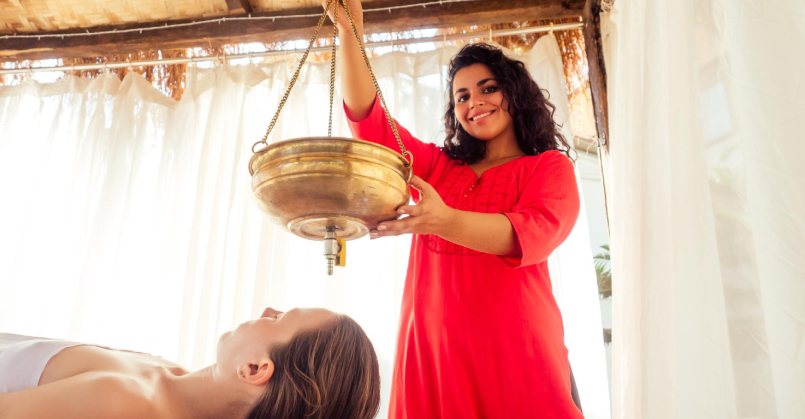
Vamana is an Ayurvedic Panchakarma therapy in which controlled therapeutic emesis removes excess Kapha dosha from the upper digestive and respiratory tracts. It is one of the five cleansing (Shodhana) therapies of Panchakarma and is always done under the supervision of an Ayurvedic doctor.
This guide is written by Dr. Arun Radhesh R (BAMS, MBA), a fourth-generation Ayurvedic doctor with 14 years of experience and Chief Physician at Ayur Wakeup, Kerala. It covers how Vamana works, who it suits, who should avoid it, the full procedure, the diet and the best season.
What is Vamana in Ayurveda?
Vamana is a supervised, controlled therapeutic emesis that clears excess Kapha dosha and accumulated toxins (ama) from the stomach, chest and upper respiratory tract. Ayurveda treats it as a core purification therapy within Panchakarma.
It is not a one-time cleanse. Vamana is a full treatment cycle of preparation, the main procedure and recovery, and each stage matters for the result.
What are the benefits of Vamana treatment?
In Ayurveda, Vamana is used to clear excess Kapha and ama, which may support digestion, breathing, skin, metabolism and energy. The benefits traditionally described are:
- Digestion: improves Agni (digestive fire) and removes undigested waste (ama)
- Respiratory health: relief from congestion, cold and asthma-type complaints
- Metabolic balance: supports weight management and diabetes care
- Skin: relief in conditions such as psoriasis and eczema (see Ayurvedic skin care treatment)
- Mind: better mental clarity as Tamas qualities reduce
- General health: stronger natural defences, more energy and a clearer complexion
Results differ from person to person and depend on the condition, the constitution and how well the preparation and diet are followed.
Which conditions is Vamana used for?
Vamana is mainly used for Kapha and Kapha-Pitta conditions of the chest, skin and metabolism. Your doctor decides after examining your constitution and condition.
- Respiratory: bronchial asthma, chronic bronchitis, rhinitis and sinusitis (see respiratory problems)
- Skin: psoriasis, eczema, acne vulgaris and urticaria (see psoriasis treatment in Kerala)
- Metabolic: obesity, being overweight, dyslipidemia and diabetes mellitus (see weight loss treatment)
- Kapha-related: allergies, PCOS and repeated colds
- Constitution: best suited to Kapha and Kapha-Pitta body types
Who should not take Vamana?
Vamana is not suitable for pregnant women, children, the elderly, or people with heart disease, severe weakness or bleeding disorders. It is also not advised for people with a purely Vata constitution or Vata disorders.
- Absolute contraindications: pregnancy, children and the elderly
- Medical conditions: heart disease, high blood pressure, severe weakness and bleeding disorders
- Constitution: Vata constitution or Vata disorders only
- Digestive state: very strong digestive fire (Teekshnagni) or severe hunger
A consultation with an Ayurvedic doctor is essential before starting. Vamana should never be tried at home.
How is the Vamana procedure done?
Vamana is done in three stages: preparation (Purva Karma), the main procedure (Pradhana Karma) and post-procedure care (Paschat Karma). The full treatment usually takes 7 to 15 days.
1. Purva Karma (Preparation)
Preparation loosens toxins and brings them towards the stomach so they can be expelled.
- Pachana and Deepana: digestive and appetising herbs such as Trikatu Churna
- Internal oleation (Abhyantara Snehana): medicated ghee or oil for 3 to 7 days
- External oleation and steam (Bahya Snehana and Swedana): full-body massage with Bala Taila, followed by steam therapy to induce sweating
- Eve of the procedure: a warm, easily digestible, Kapha-increasing diet such as curd, rice and milk
2. Pradhana Karma (Main Procedure)
The main procedure is done early in the morning, between 6:00 AM and 9:00 AM, under close medical monitoring.
- Stomach filling (Aakantha pana): the patient drinks milk or sugarcane juice up to the throat
- Vamana yoga: a herbal combination of Madanaphala, Vacha, Saindhava Lavana (rock salt) and honey induces emesis
- Supportive decoction: Yashtimadhu Phanta helps the vomiting
The doctor monitors the patient throughout to prevent dehydration and other complications.
3. Paschat Karma (Post-Procedure Care)
Immediate care includes Dhumapana (medicated smoke) and Gandusha (gargling). After that, rest, a calm environment and a gradual diet are essential (see the diet section below).
How do doctors know a Vamana has worked?
In Ayurveda, the success of Vamana is measured with four classical criteria rather than by a fixed number of vomits. This is what the doctor checks during the session.
| Criteria | What it measures | Classical reference |
|---|---|---|
| Vegiki | Number of vomiting bouts | Hina (mild): 4, Madhyama (moderate): 6, Pravara (best): 8 |
| Maniki | Quantity eliminated | Prastha, about 540 ml |
| Antiki | End point of the procedure | Pitta (bile) starts to appear in the vomitus |
| Laingiki | Signs and symptoms | A feeling of lightness and clarity |
The doctor stops the procedure when these signs are seen, so every patient’s session is different.
What is the Vamana treatment diet?
The Vamana diet has two parts: a warm, Kapha-increasing meal on the eve of the procedure, and a graded diet called Samsarjana Krama afterwards. Following it strictly protects digestion and the result of the treatment.
Pre-Treatment Diet:
- Warm, easily digestible foods, with Kapha-increasing foods such as curd, rice and milk on the eve of the procedure
Post-Treatment Diet (Samsarjana Krama):
- Day 1–2: Rice gruel (Peya)
- Day 3–4: Thin rice porridge (Vilepi)
- Day 5–6: Thick rice with ghee and cumin
- After Day 7: Gradual shift to a normal diet with fresh, easily digestible food
Avoid fried, spicy, processed and heavy foods for at least 2–3 weeks.
What should you avoid after Vamana?
After Vamana, avoid loud speech, sun exposure, dust, cold, loud sounds, excessive travel and mental stress. Stay hydrated and get plenty of rest.
Once the recovery period is over, gentle yoga and meditation can be added slowly.
What is the best season for Vamana?
The best time for Vamana is Vasanta Ritu, the spring season (March and April). Kapha accumulates in spring, so clearing it then helps protect against Kapha disorders later in the year.
For general health, once a year in spring is usually enough.
How long does Vamana take and what does it cost?
A complete Vamana course usually takes 7 to 15 days, and the cost depends on the centre, the doctors’ experience, the duration and the facilities. At Ayur Wakeup, [add package price range and duration here].
The cost usually includes:
- Initial consultation with an Ayurvedic doctor
- Pre-treatment oleation (internal and external)
- Herbal formulations used during the therapy
- The supervised Vamana procedure
- Post-treatment care and diet support
- Accommodation and wellness facilities, for residential programmes
See all Ayurvedic treatment packages, or book a consultation with Dr. Arun to get a plan that fits your condition.
FAQs
Is Vamana treatment painful?
Vamana can feel uncomfortable during the vomiting stage, but it is closely monitored by the doctor, and most people feel lighter afterwards.
How often should Vamana be done?
Once a year, ideally in spring, is generally enough for general health. For a specific condition, your doctor will advise the frequency.
Can Vamana be done at home?
No. Vamana must be done under professional supervision at a licensed Ayurvedic centre because it needs preparation, monitoring and a graded diet afterwards.
How long does a Vamana treatment take?
The complete course usually takes 7 to 15 days, including preparation, the main procedure and recovery.
When is the best time to take Vamana?
The best time is the spring season, Vasanta Ritu (March and April).
Who should not take Vamana?
Pregnant women, children, the elderly, and people with heart disease, severe weakness or bleeding disorders should not take it.
Conclusion
Vamana is a traditional Panchakarma therapy for clearing excess Kapha, and its results depend on proper preparation, a supervised procedure and a careful diet. If you are dealing with a long-standing Kapha-related problem, speak to a qualified Ayurvedic doctor first to check whether Vamana suits your constitution and health.
Book an Ayurvedic consultation with Dr. Arun Radhesh R | Meet the doctor
Medical disclaimer: This article is for general education and is not a substitute for medical advice. Vamana should only be done after a consultation and under the supervision of a qualified Ayurvedic doctor.


