

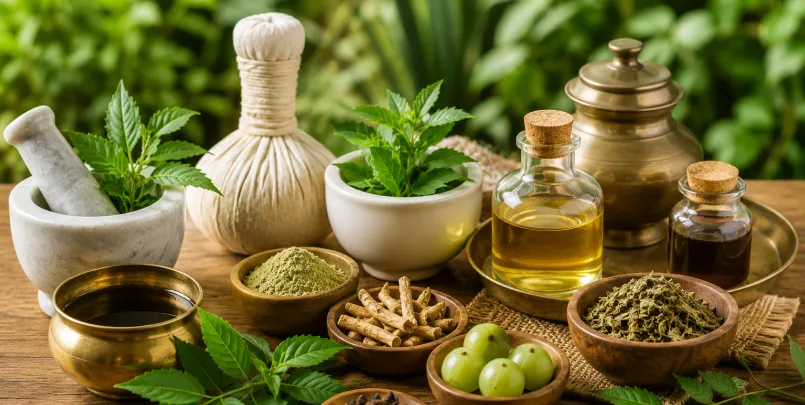
Ayurvedic Treatment for Infertility Kerala: What to Know
By Ayur wakeup | June 15, 2026
Month after month of trying, and still no result. If that’s where you are right now, you’re not alone, and you’re probably looking at every option carefully. Ayurvedic treatment for infertility Kerala has been part of this conversation for a lot of women, but most of what’s written about it online is either vague or oversold. This is a straightforward look at what it actually involves.
What Does Ayurveda Really Look At?
Western fertility medicine focuses on the reproductive system directly. Ayurveda asks a different set of questions first. Why is the body struggling? Where is the imbalance coming from?
In classical Ayurvedic texts, female infertility is connected to the health of Artava Dhatu, the reproductive tissue. When digestion is weak, when toxins have accumulated in the channels, or when Vata is aggravated, that tissue doesn’t get properly nourished. Hormonal signaling gets disrupted. The uterine environment becomes less receptive.
That’s the foundation the treatment is built on. Not just the symptom, but whatever is underneath it.
The Role of Panchakarma in Ayurvedic Treatment for Infertility Kerala
A lot of people hear Panchakarma and think of a general detox retreat. For fertility, it’s more specific than that.
Panchakarma is a five-procedure therapeutic system. In the context of reproductive health, it’s used to clear accumulated toxins, restore circulation to the pelvic region, and prepare the body before deeper nourishment therapies begin. The sequence matters. You don’t start rebuilding until the channels are clear enough to actually respond.
At Ayur Wakeup in Kerala, fertility programs are physician-led and built around this logic. Practitioners assess digestion, menstrual patterns, stress load, and constitutional type before designing any treatment plan. No two programs look identical because no two presentations are the same.
Uttara Basti
This one comes up often in discussions about Ayurvedic fertility support, and for good reason. Uttara Basti involves the application of medicated oils or herbal preparations through the reproductive tract. It’s used specifically to support uterine function and create a more favorable internal environment. It’s a clinical procedure, not a routine therapy, and it’s only applied when a physician determines it’s appropriate.
Abhyanga and Shirodhara
Stress is a reproductive disruptor. That’s not a wellness platitude; the cortisol-fertility link is well documented.
Abhyanga, a full-body warm oil treatment, works on the nervous system through sustained rhythmic contact. Shirodhara, where a continuous stream of warm oil is poured across the forehead, has a measurable calming effect on the hypothalamic-pituitary axis. That matters in fertility because the brain’s hormonal command center is directly involved in ovulation and cycle regulation.
Conditions This Approach Typically Addresses
Irregular cycles. Anovulation. PCOS-related hormonal disruption. Stress-driven reproductive dysfunction. Poor uterine lining. These are the presentations that come up most often in Ayurvedic fertility consultations.
PCOS in particular responds to Ayurvedic intervention because the approach targets metabolic correction and Kapha imbalance rather than just managing symptoms. Regularizing the menstrual cycle naturally becomes a core part of the treatment goal.
Ayur Wakeup offers structured programs ranging from 7 days for early-stage hormonal concerns to 21-day and 28-day intensives for more complex or long-standing cases. The duration is guided by clinical assessment, not a package menu.
One Thing Worth Saying Clearly
Ayurvedic treatment is not a substitute for specialist fertility care. Many women use it alongside IVF preparation or between treatment cycles, not instead of medical intervention. A competent Ayurvedic physician will ask about your current medical situation and coordinate accordingly.
If you’re currently under the care of a fertility specialist, that relationship stays primary. Ayurveda works best when it’s part of an informed, coordinated approach.
Final Thoughts
Ayurvedic treatment for infertility Kerala is not a shortcut. It takes time, it requires an honest clinical assessment, and the results depend heavily on what’s actually driving the difficulty in the first place. What it offers is a systematic way of addressing the body as a whole rather than chasing a single variable.
Ayur Wakeup has been doing this work for over 25 years under qualified medical supervision. That kind of experience shapes how practitioners read a case and how they build a treatment plan.
If you’ve been wondering whether Ayurveda fits into your fertility journey, the better starting point isn’t the internet. It’s a proper consultation with someone who can actually look at your situation.
FAQ
Does Panchakarma actually help with female infertility, or is it just a wellness trend?
It’s a legitimate clinical system, not a trend. For fertility specifically, Panchakarma is used to clear internal blockages and prepare the body for deeper reproductive therapies. The difference between a wellness retreat and a medical Panchakarma program is the physician oversight and the treatment sequencing. That gap matters a lot.
How many days of treatment does Ayurvedic infertility therapy actually need?
Depends on the case. Stress-related cycle irregularities can show shifts in a 7-day program. PCOS or long-standing hormonal issues usually need 21 to 28 days of structured treatment plus lifestyle adjustments after. There’s no single answer, which is exactly why the initial consultation carries so much weight.
Can I do Ayurvedic treatment at the same time as IVF?
Usually not during an active IVF cycle, but many women use Ayurvedic programs in the preparation phase. You need both your fertility doctor and Ayurvedic physician to be aware of what the other is doing. Herb-drug interactions are real, and supervision on both sides is necessary.
What is Uttara Basti, and is it painful?
It’s a medicated oil or herbal preparation administered through the reproductive tract to support uterine and ovarian function. When done by a trained practitioner in a proper clinical setting, discomfort is minimal. It’s not a routine procedure applied to everyone; a physician decides based on your specific presentation.
Why Kerala specifically for Ayurvedic fertility treatment?
Kerala has an unbroken lineage of Ayurvedic practice, trained vaidyas, and access to authentic medicinal herbs grown in the right climate conditions. Centers like Ayur Wakeup have been operating for decades under medical supervision. That combination of tradition, expertise, and accountability is genuinely harder to replicate elsewhere.