
By Ayur wakeup | August 19, 2026
Psoriasis and cold weather are closely linked, and the connection usually shows up before anyone reaches for a heavier moisturizer. Indoor heating pulls moisture out of the air, outdoor humidity drops, and skin that behaved through the warmer months starts cracking at the knuckles, elbows, and scalp line within a week or two of the temperature shift.
This is not bad luck. Cold and dry weather sits on the standard list of psoriasis triggers , alongside stress, throat or skin infections, and stopping topical steroids too abruptly. Understanding why the cold air matters and what to actually change once plaques start spreading makes the difference between riding out a rough season and getting ahead of it.
How Do Psoriasis and Cold Weather Interact?
Warm, humid climates keep the outer skin layer soft and pliable. That is part of why some Ayurvedic psoriasis programs in Kerala are timed around the monsoon months of June to September, when high humidity keeps pores open and skin from drying out. Cold weather does the opposite. Low humidity draws moisture out of the skin, and skin that dries out fast is exactly the kind of surface psoriasis plaques use to spread and thicken.
Central heating compounds the problem indoors. Heated air holds even less moisture than the cold air outside it warms, so a room that feels comfortable can still be quietly drying out already-compromised skin for hours at a stretch. Scalp psoriasis and psoriasis on the elbows and shins tend to react first, since these areas already carry thinner natural oil coverage.
What Cold Weather Does to Vata Dosha
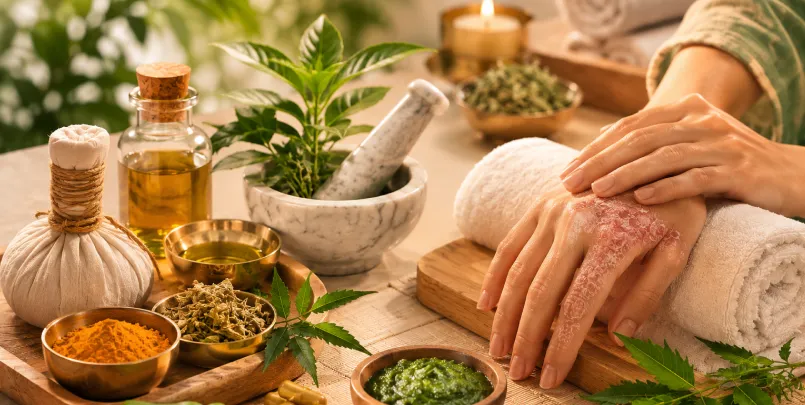
In the Ayurvedic view of psoriasis, the skin’s dryness, scaling, and cracking are linked to an aggravated Vata dosha. Cold, dry weather is precisely the kind of environment that unsettles Vata further, which is one reason flare-ups cluster in winter rather than spreading evenly across the year. When Vata is disturbed alongside a build-up of metabolic toxins, or ama, in the blood and deeper tissues, plaques tend to surface more visibly on the skin.
This framework does not replace a dermatologist’s diagnosis. It offers a different lens for why the same skin condition behaves differently depending on season, climate, and what is happening internally rather than only what is applied topically.
Common Winter Triggers to Watch For
Cold weather rarely acts alone. Stress tends to climb in winter for unrelated reasons (shorter days, holiday pressure, indoor confinement), and stress is one of the most consistent psoriasis triggers on its own. Throat and skin infections are more common in colder months too, and either can set off a flare in someone who was previously stable. Alcohol, smoking, and certain incompatible food combinations round out the list of common aggravators. Stopping a topical steroid abruptly once winter symptoms improve is another frequent misstep, since sudden withdrawal can trigger a rebound flare rather than lasting improvement.
What to Change When Flares Worsen
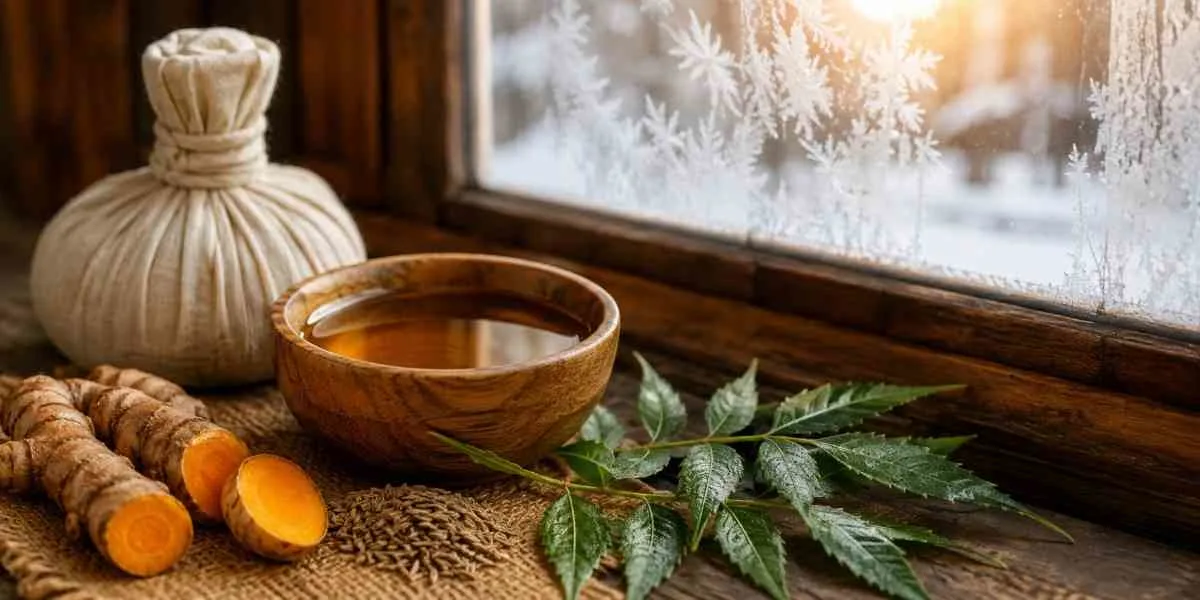
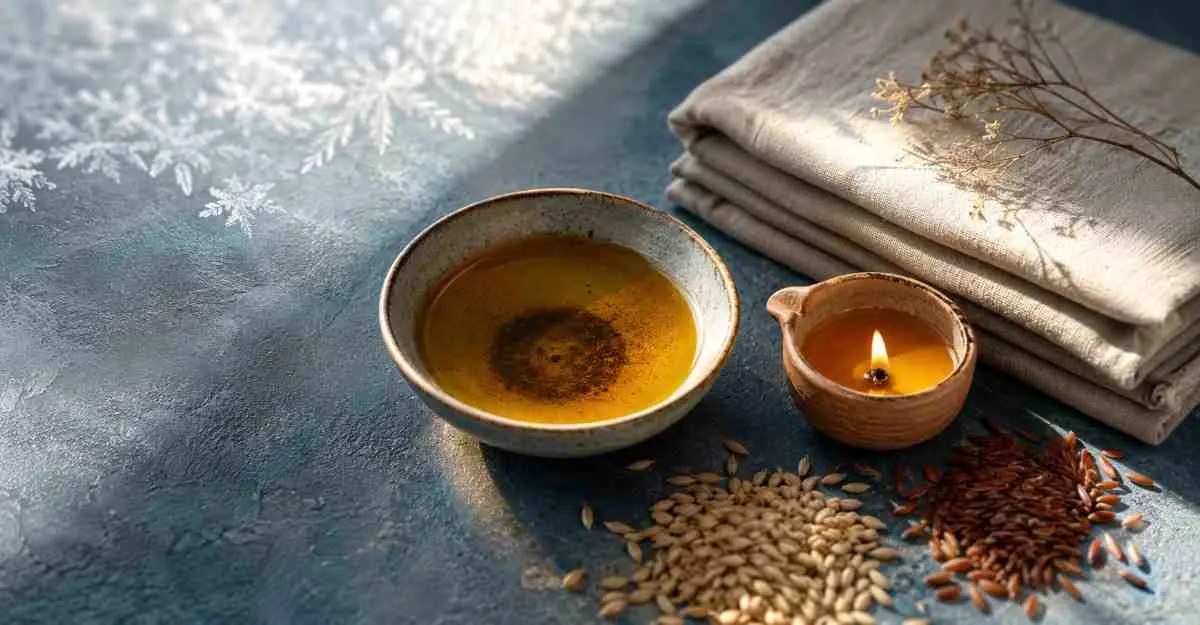
Diet is one of the more practical levers available once cold weather sets in. Bitter gourd, ash gourd, and neem are traditionally favored for psoriasis-prone skin, along with older grains such as barley, red rice, and wheat, and cooling spices like turmeric and cumin. Warm, not iced, water is generally preferred over cold drinks during flare periods. On the avoidance side, fermented foods such as pickles and curd, incompatible combinations like milk with fish, and excess salt, chilies, or vinegar are typically steered away from, along with alcohol and smoking.
Topical routine matters just as much. Since humidity helps medicated oils penetrate the skin, cold and dry conditions call for more consistent oil application rather than less, along with humidifying indoor air where possible. If steroid use needs to change, doing it gradually under medical supervision reduces the risk of a rebound flare compared with stopping all at once.
A Structured Treatment Path When Flares Don’t Settle
Diet and topical changes help most winter flares, but some cases keep returning regardless. For those, Ayurveda offers a more structured route than home care alone. The structured Ayurvedic treatment for psoriasis follows a three-stage Panchakarma protocol: digestive preparation first, then blood-purifying therapies such as Virechana, then rejuvenation work meant to steady the immune response once the detox is complete. It is not a quick fix, and outcomes depend on the individual, but the target is the same internal imbalance behind recurring winter flares, not just the patches on the surface.
Final Thoughts
Psoriasis and cold weather will keep circling back to each other every winter, but the cold does not cause the condition; it just makes an existing one harder to manage, and the pattern tends to repeat the same way each year for the same person. Once you know your own seasonal pattern, from the specific triggers to the timing of the worst weeks, you can adjust diet, topical routine, and stress load before the flare fully sets in rather than reacting after it does. What does your skin’s winter pattern actually look like, and which part of the routine changes first when the temperature drops?
FAQ
Why does my psoriasis get worse every winter?
Cold, dry air pulls moisture from the skin faster than it can replace it, and indoor heating adds to that effect. In the Ayurvedic view, this kind of environment aggravates Vata dosha, which governs dryness and scaling, so plaques that were manageable in warmer months often resurface once temperatures drop.
Does indoor heating make psoriasis flares worse than the cold outside?
It often does. Heated indoor air holds less moisture than cold outdoor air, so spending hours in a heated room can dry out the skin more steadily than a short walk outside in winter. Using a humidifier and keeping topical oils consistent helps offset that effect.
What foods help during a winter psoriasis flare?
Bitter gourd, ash gourd, neem, older grains like barley and red rice, and cooling spices such as turmeric and cumin are traditionally favored. Fermented foods, incompatible combinations like milk with fish, excess salt or chilies, and alcohol are generally avoided during active flares, particularly in colder months.
Is it safe to stop steroid cream once winter symptoms calm down?
Stopping a topical steroid suddenly is one of the more common triggers for a rebound flare. Tapering gradually under a doctor’s guidance, rather than stopping outright, tends to reduce that risk. Any change to a prescribed treatment should go through the physician who prescribed it.
Can Ayurveda help with psoriasis flares that happen every winter?
Some people do see their winter flares settle down with Panchakarma detox and a Vata-pacifying diet, since the approach targets the toxin buildup driving the flare rather than just the visible patches. No system, Ayurveda included, can promise a permanent cure. Anyone claiming otherwise is overselling it.