


Psoriasis is a long-term skin condition. Red, raised, scaly patches appear on the elbows, knees, scalp and lower back, and they tend to come and go. Many people ask whether it can be cured permanently. The honest answer is that no medical system, modern or traditional, can promise a guaranteed permanent cure. What Ayurveda can offer is a structured way to calm flare-ups, ease itching and scaling, reduce stress triggers, and support longer periods of relief.
This guide explains how Ayurveda understands psoriasis, what treatment at Ayur Wakeup involves, what the evidence says, and what one of our guests wrote about her own experience.
What is psoriasis?
Psoriasis is a chronic immune-mediated condition in which skin cells renew far faster than normal. The extra cells pile up as thick, scaly plaques. It is not contagious. Common triggers include stress, poor sleep, infections, certain medicines, alcohol, smoking and irregular eating habits.
Psoriasis can also affect the joints. This is called psoriatic arthritis, and it needs early, careful attention. If you have joint pain, morning stiffness or swollen fingers along with skin patches, read about our psoriatic arthritis treatment as well.
How Ayurveda understands psoriasis
Ayurveda describes psoriasis under Kushtha (skin disorders), most closely as Kitibha or Ekakushtha. The classical view is that an imbalance of the doshas, mainly Vata and Kapha, along with Pitta aggravation in the blood and skin tissues, leads to dryness, scaling, itching and inflammation. Accumulated toxins (ama), irregular digestion and stress are seen as contributing factors.
Because the cause is understood as personal, treatment is personal too. Two people with psoriasis may receive very different plans.
How we approach psoriasis treatment at Ayur Wakeup
Treatment follows a doctor’s assessment of your prakriti (constitution), the type and location of your psoriasis, your digestion, stress levels, medical history and any medicines you already take. A plan usually combines the following. You can see the full programme on our Ayurvedic psoriasis treatment in Kerala page.
1. Internal medicines
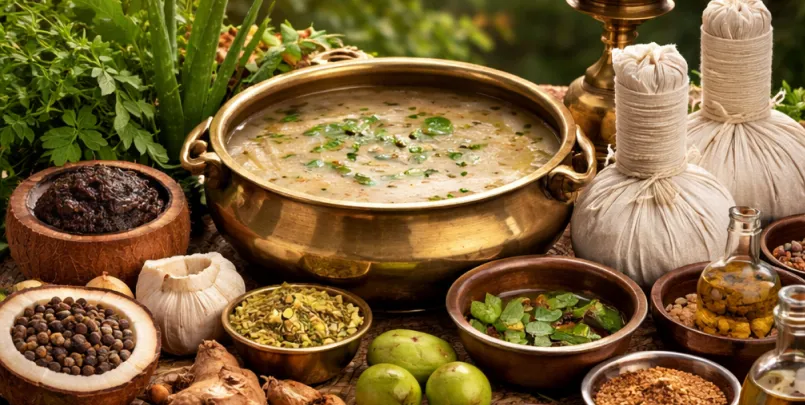
Herbs traditionally used for skin conditions include guduchi, neem, manjistha, khadira and turmeric. They are prescribed as decoctions, tablets or medicated ghee after assessment. Please do not self-medicate with these. Dose and combination matter, and some herbs are not suitable alongside certain medicines.
2. Panchakarma (detox and cleansing)
Panchakarma is the set of five cleansing procedures: Vamana (medically supervised therapeutic emesis), Virechana (therapeutic purgation), Basti (medicated enema), Nasya (nasal administration) and Raktamokshana (blood purification, used only in selected cases). Not every guest needs every procedure. Some procedures are not suitable for people who are very weak, pregnant, elderly or have certain medical conditions, so they are only done under physician supervision after screening.
3. External therapies
Medicated oils, herbal pastes and oil massages (abhyanga) are used to soften scales, reduce dryness and calm itching. Your therapist adjusts the oils and procedures to the condition of your skin on that day.
4. Stress care
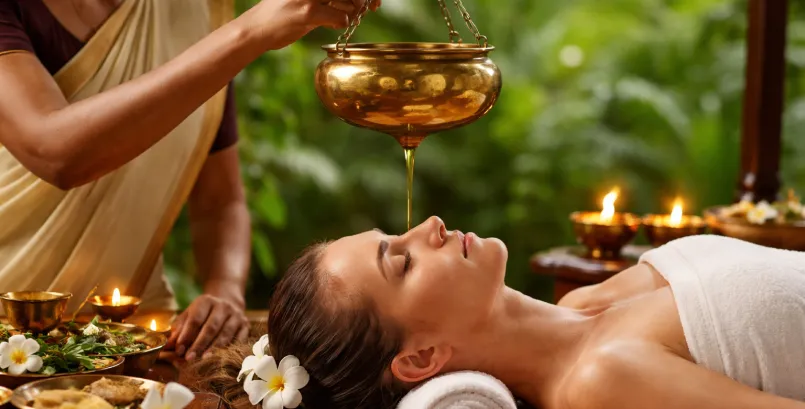
Stress is one of the best-known triggers of flare-ups. Shirodhara, yoga, pranayama and meditation are included to calm the nervous system. Our yoga programme can be added to your stay.
5. Diet and lifestyle
Diet is part of the treatment, not an extra. In general, guests are advised to:
- Favour fresh, warm, freshly cooked vegetarian meals with bitter and astringent vegetables
- Reduce very spicy, sour, fried, fermented and processed foods
- Limit sugar, alcohol and smoking
- Keep regular meal and sleep times
- Drink enough water and stay moderately active
Your doctor will adapt these to you. Not everyone needs to avoid dairy or gluten, for example.
What does the evidence say?
Research on Ayurvedic treatment of psoriasis is still limited. Most published work consists of case reports and small studies, and larger controlled trials are needed. Because of this, we do not promise a permanent cure. What we see in practice is that many guests report less itching and scaling, fewer flare-ups and better sleep and mood. Results depend on the type and severity of the condition, how long you have had it, and how closely the diet and lifestyle plan is followed afterwards.
Ayurvedic care should also not replace your dermatologist’s treatment on its own. If you are on prescribed medicines, do not stop them without medical advice. Our doctors will work around them.
A guest’s experience
We do not publish anonymous or invented testimonials. Here is a recent Google review from a guest who came to us for psoriatic arthritis (shared as written, with her public Google name):
“I came to Ayurwakeup@ Trivandrum for Psoriatic Arthritis treatment in Kerala. Dr. Arun Radhesh provided excellent Ayurvedic treatment for arthritis and Panchakarma detox. My joint pain and skin symptoms are considerably improved.”
“Wonderful massages and great vegetarian food.”
★★★★★ Illyas Emerald, Google review (Rooms 5/5, Service 5/5, Location 5/5)
This is one guest’s experience, not a guarantee. Every person responds differently. You can read more reviews from our guests on our Google listing.
Who should see a doctor before travelling?
Please book a consultation first if you:
- Have joint pain or swelling along with skin patches
- Have widespread or rapidly worsening psoriasis, or painful cracking skin
- Take regular medicines such as immunosuppressants, steroids or blood thinners
- Are pregnant, breastfeeding or have a chronic illness such as diabetes
You can start with an online consultation and share your reports and photos, and our doctors will advise if a residential programme suits you.
Frequently asked questions
Can Ayurveda cure psoriasis permanently?
No treatment can guarantee a permanent cure for psoriasis. Ayurveda aims to control symptoms, reduce flare-ups and support longer periods of relief through detox, medicines, diet and stress care. Individual results vary.
How long does Ayurvedic treatment for psoriasis take?
It depends on the type and severity. Residential programmes are usually planned over a few weeks, followed by medicines and diet at home. Your doctor will set the duration after assessment. (Confirm programme lengths with Dr. Arun before publishing.)
Is Panchakarma safe for psoriasis?
It is safe when it is chosen for you by a qualified physician and done under supervision. It is not suitable for everyone, which is why a consultation comes first.
Which foods should I avoid with psoriasis?
In general, very spicy, sour, fried, fermented, processed and sugary foods, and alcohol. Your doctor will give you a plan that fits you.
Can I stop my current psoriasis medicines?
No. Do not stop or change prescribed medicines on your own. Tell our doctors what you take so the treatment can be planned safely around it.
Is Ayurveda helpful for psoriatic arthritis?
Many guests come to us for joint pain with psoriasis. Treatment combines Panchakarma, medicines and therapies, along with regular follow-up with your own specialist. See our psoriatic arthritis treatment page.
Start with a consultation
If you or someone you care about is living with psoriasis, the first step is a personal assessment. Book an online consultation or call +91 97472 53007.
Medical disclaimer: This article is for general information and does not replace advice from your doctor or dermatologist. Ayurvedic treatment should be taken under the supervision of a qualified physician. Results vary from person to person, and the guest review above reflects one person’s experience.
Reviewed by Dr. Arun Radhesh R, BAMS, Chief Physician, Ayur Wakeup Ayurveda, Trivandrum.


Kiran sekar
Scalp psoriasis