
Living With Psoriasis Dry Patches: The Daily Practicalities
By Ayur wakeup | August 14, 2026
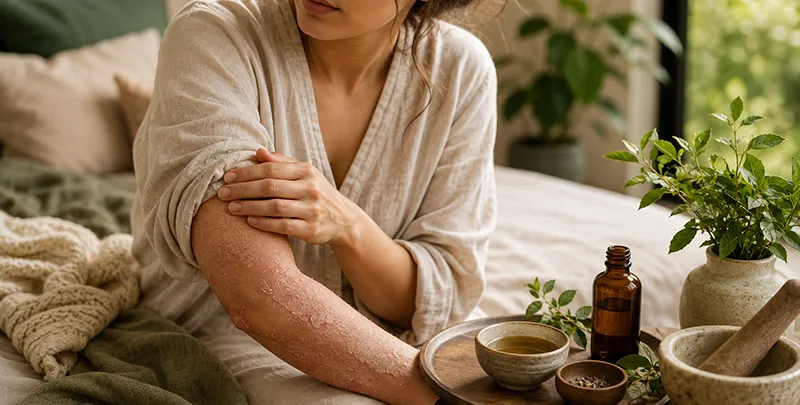
Nobody warns you about the sheets. Or the black trousers. Psoriasis dry patches are treated like a skin problem in most articles, and they are, but the part that wears people down is smaller and more constant than that. It is the 3am itch. The flakes on the collar. Deciding whether a wool jumper is worth it.
This piece skips the biology lecture. It covers sleep, clothes, and the ordinary friction of a normal week, plus how Ayurveda reads what your skin is doing.
Why Do Psoriasis Dry Patches Feel Worse at Night?
Two things stack up after dark. Your skin loses moisture faster while you sleep, and there is nothing left to distract you from the itch. Bedding rubs. The room heats up. You scratch without deciding to.
A few things people find help with:
- Keep the bedroom cooler than feels natural. Heat pulls Pitta upward, which shows redness and burning, and a warm room amplifies it.
- Moisturise or oil the skin about twenty minutes before bed, not as you get in. It needs time to sink in rather than transfer straight onto the sheets.
- Cotton bedding, washed often, no heavy fragrance in the detergent.
- Trim your nails short. It will not stop the scratching, but it limits the damage when it happens. Broken skin can invite infection, and infections are a known flare trigger.
- If sleep is broken most nights, mention it to your doctor rather than pushing through. Stress and poor sleep feed each other, and stress is one of the strongest triggers there is.
Clothing That Does Not Fight Your Skin
Dressing around plaques is a daily negotiation. Some practical ground rules that hold up:
- Loose beats fitted. Friction on elbows, knees, and the lower back is one of the quiet reasons patches thicken in exactly those spots.
- Soft cottons and light linens over wool and synthetics. Wool scratches. Synthetics trap heat and sweat.
- Midtones hide flakes better than black or white. Not glamorous advice, but people say it changes how confident they feel in meetings.
- Wash new clothes before wearing them. Finishing chemicals on fabric can irritate already inflamed skin.
- Rethink the tight waistband. Anywhere elastic digs in is somewhere plaques tend to settle.
The Ayurvedic Read on Dryness and Scaling
Classical texts group psoriasis under kushtha, usually Kitibha Kushtha or Eka Kushtha. What is useful about that framing is how it splits the symptoms you actually notice.
Vata shows up as dryness, scaling, and cracking. Pitta shows up as redness, burning, and inflammation. Kapha shows up as thickening, swelling, and that stubborn deep itch.
Most people can tell which one dominates on a bad week. Dry and flaky, or hot and angry, or thick and heavy. That reading is part of what Ayurvedic physicians use when choosing oils and internal medicines, alongside your constitution, or Prakriti.
Underneath that, the Ayurvedic view holds that metabolic toxins, called ama, build up and affect the blood, muscle, and lymph tissue, which is why the approach works on digestion and blood before it works on the patch itself.
Weather, Water, and Everyday Triggers
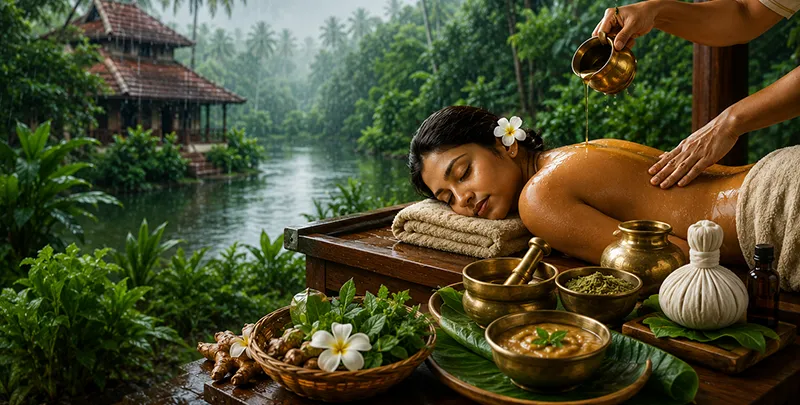
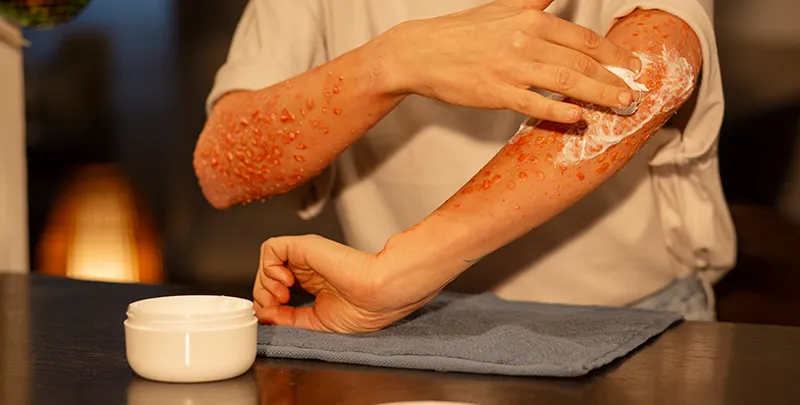
Cold, dry air is hard on psoriasis dry patches. Warm, humid air is easier, which is one reason Ayurvedic treatment for psoriasis in Kerala draws people during the monsoon months. Humidity keeps the skin from drying out and helps oils penetrate.
Other things worth watching over an ordinary month: long hot showers, harsh soaps, alcohol, smoking, throat infections, and stopping a topical steroid suddenly. That last one matters. Steroids should be tapered under medical guidance, never dropped overnight, because abrupt stopping is associated with rebound flares.
Food gets asked about constantly. Ayurvedic practice tends to favor bitter vegetables such as bitter gourd and ash gourd, older grains like barley and red rice, cooling spices such as turmeric and cumin, and warm water. It steers away from fermented foods, heavy salt and chilli, and incompatible combinations like milk with fish. Whether any of that shifts your skin is individual and worth tracking rather than assuming.
Building a Week You Can Actually Keep
The routines that work are the boring ones people stick with. Oil the skin daily. Sleep at roughly the same hour. Move your body without exhausting it. Keep a short note of what preceded each flare, because personal triggers rarely match the general list exactly.
At Ayur Wakeup, guests leave with a written home care plan and follow-up consultations, largely because most relapses happen when the routine quietly stops.
Final Thoughts
Living well with psoriasis is less about one big intervention and more about a hundred small adjustments that stop your skin fighting your day. Cooler room, softer fabric, steadier routine.
Which part of your week does your skin make hardest, the mornings or the nights?
Medical disclaimer: This article is for general educational purposes and is not a substitute for professional medical advice, diagnosis, or treatment. Ayurvedic therapies are intended to complement, not replace, conventional medical care. Do not stop or change any prescribed medication without consulting your treating physician. Individual experiences vary.
FAQ
Why do my psoriasis dry patches itch more at night?
Skin loses moisture faster overnight, the bed warms you up, and there is nothing else competing for your attention. A cooler room, cotton sheets, and oiling twenty minutes before bed usually take the edge off.
What fabrics are best if I have psoriasis?
Loose cotton and light linen. Wool scratches; synthetics trap heat. Wash anything new before wearing it, since fabric finishing chemicals can sting inflamed skin.
Does weather really affect psoriasis?
Yes, noticeably. Cold, dry air dries plaques out and makes them crack. Warm humid air is gentler, which is part of why Kerala’s monsoon season suits this kind of treatment.
Can I stop my steroid cream if I start Ayurvedic treatment?
Not on your own. Stopping suddenly is linked to rebound flares. Any tapering needs to be planned with the doctor who prescribed it.
Is there a permanent cure for psoriasis?
No system of medicine can promise one. What is realistic is longer, calmer stretches between flares through detox, diet, and routine. Anyone promising a guaranteed cure is overselling.